



Toronto offices are filling back up in 2026. Many sat partially empty for months or cycled through inconsistent hybrid schedules. A structured return-to-office cleaning checklist helps facility managers bring every zone up to a standard that employees trust. Impact Cleaning Services has supported commercial office cleaning in Toronto for over seven decades. The patterns behind a successful re-entry follow a clear, repeatable process.
Why Toronto Offices Need a Return-to-Office Cleaning Checklist
Hybrid work created a new problem for building cleanliness. An office at 40% capacity on Monday and 90% on Wednesday picks up grime in ways no one planned for. Dust settles on desks that go untouched for days. Breakrooms spike from light use to heavy use within a single week.
A checklist solves this by removing guesswork. It gives cleaning teams a zone-by-zone reference that scales with occupancy. It also creates a paper trail for property managers who need to demonstrate compliance with Ontario workplace safety standards.
Toronto adds its own layer of complexity. Winter salt tracked through lobbies damages flooring if it sits overnight. Humidity swings between January and July create conditions for mould in poorly ventilated corners. A cleaning checklist built for a Toronto office accounts for these seasonal realities, not just generic surface wiping.
What Should a Return-to-Office Cleaning Checklist Cover Zone by Zone
A strong checklist breaks the office into distinct zones. Each zone has different traffic patterns, contamination risks, and cleaning frequencies. Treating the entire floor as one unit leads to missed spots and wasted labour.
Reception and Common Entry Areas
The front entrance is the first impression and the highest-traffic zone. It collects road grit, salt residue, and moisture from the street. Matting systems need daily inspection and weekly deep extraction. Hard floors require daily mopping with a pH-neutral cleaner to prevent salt etching. Glass doors and partitions collect fingerprints hourly and need a midday wipe on high-occupancy days.
Open-Plan and Hot-Desk Workstations
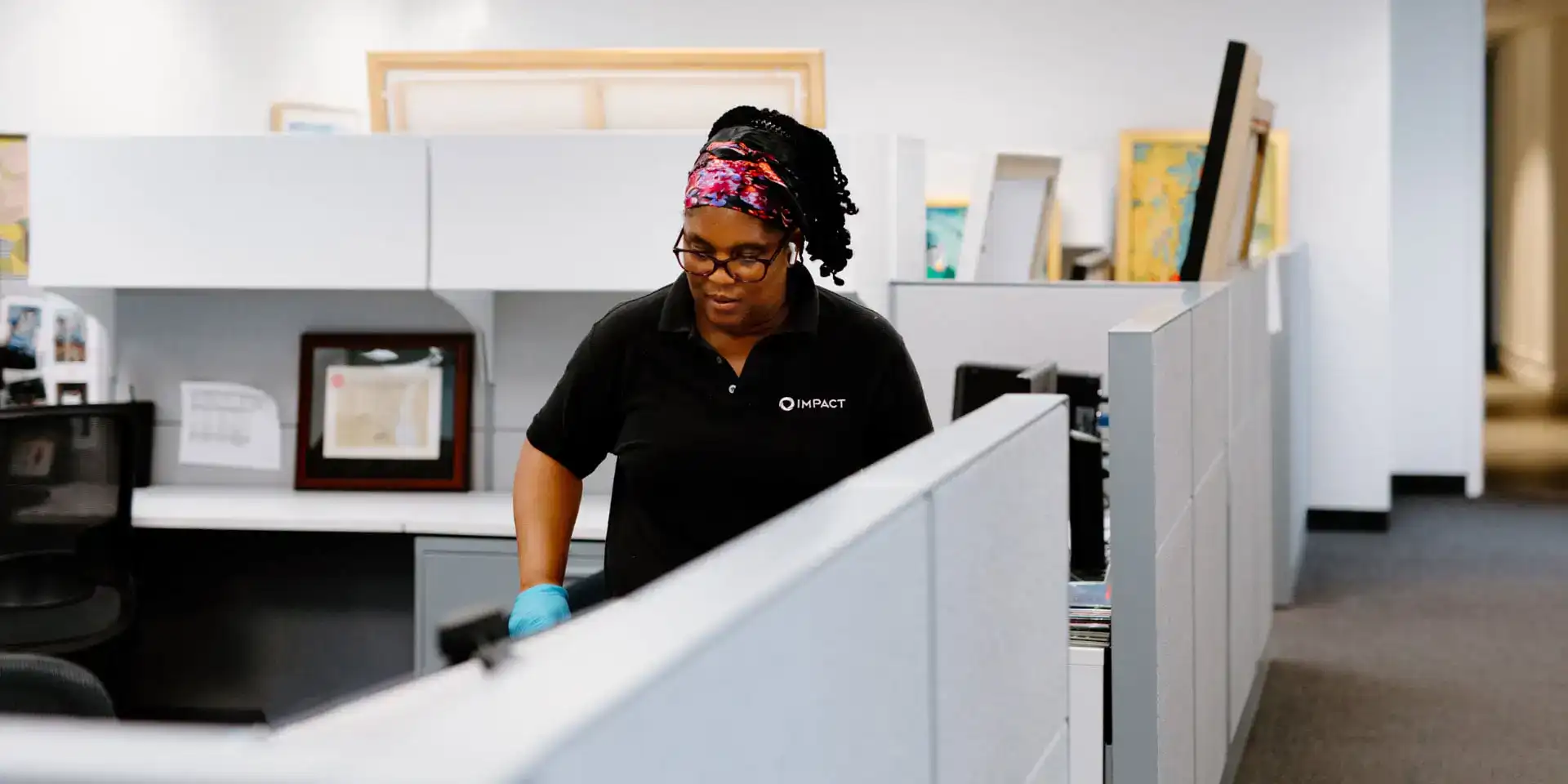
Hot-desking changed the cleaning equation. When multiple employees share the same surface throughout a day, each changeover needs a quick sanitisation. Desk surfaces, keyboard trays, and monitor stands should be wiped with a broad-spectrum disinfectant between users. Professional commercial cleaning services build this turnover wipe into shift schedules. Impact Cleaning Services teams complete it without disrupting the workflow.
Meeting Rooms and Collaboration Spaces
Conference tables, chair arms, shared remotes, and whiteboard markers are high-touch surfaces that multiple people contact within a single hour. These rooms need a wipe-down after every booking, not just once per evening. AV equipment screens and speakerphone units collect skin oils and require a non-abrasive cleaner that does not damage electronics.
Breakrooms and Kitchen Areas
Breakrooms generate the most complaints when cleaning falls behind. Countertops, sink basins, microwave interiors, and refrigerator handles need daily attention. In Toronto offices with 50 or more daily users, midday touchpoint cleaning cuts afternoon odour buildup significantly. Waste bins should be lined and emptied at minimum twice daily during full-occupancy days.
Washrooms
Washrooms require the highest cleaning frequency of any zone. A minimum standard for a Toronto office with 100 or more occupants is three scheduled service checks per day. Each check covers toilet and urinal sanitisation, sink and countertop wipes, soap and paper replenishment, mirror cleaning, and floor mopping. Grout lines around floor drains accumulate biofilm that standard mopping misses, so a weekly deep scrub is essential.
How Often Should Each Zone Be Cleaned in a Hybrid Office
Frequency depends on occupancy, not a fixed calendar. The table below outlines recommended cleaning intervals based on typical hybrid office patterns in Toronto.
These intervals assume a standard 9-to-5 schedule. Offices with evening or weekend shifts need adjusted coverage.
What Ontario Workplace Safety Standards Apply to Office Cleaning
Ontario’s Occupational Health and Safety Act (OHSA) puts the duty of a clean and safe workplace on the employer. That covers indoor air quality, slip-and-fall prevention, and shared facility sanitation. Facility managers who skip cleaning records risk liability during an injury investigation.
Toronto office buildings must also comply with municipal property standards bylaws. These cover waste management, pest prevention, and general building maintenance. Many commercial lease agreements list minimum cleaning frequencies as a condition of occupancy. Impact Cleaning Services works within these frameworks to deliver commercial deep cleaning programs that meet both provincial and municipal requirements.
How to Build a Cleaning Schedule Around Hybrid Work Patterns
A fixed Monday-to-Friday cleaning contract does not fit a hybrid office. If the building runs at 30% occupancy on Mondays and 85% on Wednesdays, cleaning hours should follow that curve.
Start by pulling badge-in data or booking system reports for the past 90 days. Map peak days and off-peak days. Assign heavier cleaning shifts to high-occupancy days and lighter maintenance shifts to quiet days. This approach avoids overspending on slow days and underserving on busy ones.
The second step is touchpoint mapping. Walk the floor and identify every shared surface: door handles, elevator buttons, printer touchscreens, vending machine panels, and stair railings. These surfaces need daily disinfection regardless of occupancy because even a single user contacts them.
Facility managers preparing a Toronto office for full or hybrid re-entry can call +1 647 492 6286 or visit the contact page to schedule a walkthrough scoped to the building’s layout and occupancy pattern.
What Cleaning Supplies Does a Return-to-Office Checklist Require
A checklist is only useful if the right products and tools are stocked before day one. Running out of disinfectant wipes on a peak-occupancy Wednesday creates gaps that the checklist was built to prevent.
Every Toronto office re-entry kit should start with pH-neutral floor cleaners for lobby stone and tile. Add broad-spectrum surface disinfectants rated on Health Canada’s DIN list. Include microfibre cloths colour-coded by zone to prevent cross-contamination. HEPA-rated vacuum bags or canisters round out the core list. Breakrooms need food-safe degreasers and stainless-steel polish. Washrooms need enzymatic drain cleaners for biofilm control and touchless soap and sanitiser refills sized to the expected headcount.
Stock levels should match occupancy projections, not last year’s order history. A building that jumps from 30 to 200 occupants in a single week needs a supply buffer. Set a reorder trigger at 30% remaining stock. The cleaning team should never work without the right product on the shelf.
How to Track and Audit Cleaning Quality After Reopening a Toronto Office
A checklist that nobody verifies becomes decoration. Quality tracking closes the loop between what was planned and what was done.
Start with a daily sign-off sheet for each zone. The cleaning lead records the time, tasks completed, and any exceptions. Digital platforms such as inspection apps with photo capture make audits faster and harder to falsify. Monthly walk-throughs by the facility manager or a third-party auditor catch slow drift before it becomes a complaint.
Tenant feedback is the other half of the data. A short monthly survey works well here. Ask occupants to rate lobby cleanliness, washroom condition, and breakroom hygiene. That gives the cleaning team a score tied to real perception. Track it month over month. If the number drops, the checklist frequency or technique needs adjustment before the complaints pile up.
In-House Cleaning vs Professional Cleaning for Return-to-Office Readiness
Some facility managers consider hiring internal cleaning staff for the return-to-office transition. This works in smaller offices with predictable schedules. It breaks down when the building scales past 10,000 square feet or when occupancy patterns shift weekly.
Professional partners also bring gear that most in-house teams lack. Auto-scrubbers, HEPA vacuums, and electrostatic sprayers cut labour hours and deliver a more even result. Companies that provide janitorial services across Toronto maintain these fleets and rotate them across client sites.
Ontario’s workplace health and safety framework spells out employer duties around hazard checks, worker training, and records. A professional cleaning partner takes on much of that compliance load, cutting risk for the facility manager.
Conclusion
A return-to-office cleaning checklist for Toronto workplaces in 2026 is a zone-by-zone system, not a single page of generic tasks. It accounts for hybrid occupancy patterns, seasonal conditions specific to Toronto, and provincial safety standards.
Impact Cleaning Services has supported commercial properties across the Greater Toronto Area since 1954. Facility managers exploring the cost side of this transition can review the guide on cleaning costs in 2026. It compares in-house, outsourced, and hybrid models side by side.
The right checklist keeps employees confident in their workspace and keeps the building compliant. Impact Cleaning Services at +1 647 492 6286 or through the contact page can scope a return-to-office cleaning plan. Each plan is matched to the building’s size, layout, and occupancy schedule.
Frequently Asked Questions
What zones should a return-to-office cleaning checklist cover in a Toronto commercial building?
A thorough checklist divides the office into reception, open-plan desks, hot-desk stations, meeting rooms, breakrooms, washrooms, and corridors. Each zone has different contamination risks and traffic patterns that demand separate cleaning frequencies rather than a blanket daily wipe.
How often should hot-desk surfaces be cleaned when employees share workstations in a hybrid office?
Hot-desk surfaces need a disinfectant wipe between every user changeover, not just at the end of the day. Shared keyboards and monitor stands accumulate skin oils and bacteria with each new user. A single end-of-day clean leaves six to eight hours of cross-contamination unchecked.
Does Ontario law require employers to maintain a cleaning checklist for commercial office buildings?
Ontario’s OHSA requires employers to maintain a safe and sanitary workplace but does not mandate a specific checklist format. A documented cleaning schedule serves as proof of due diligence during inspections or injury investigations. Most Toronto facility managers treat it as a compliance tool.
Why does winter salt damage matter for return-to-office cleaning in Toronto specifically?
Toronto sidewalks are heavily salted from November through March. Foot traffic carries calcium chloride residue onto lobby floors and carpet tiles. Salt left overnight etches stone, discolours grout, and degrades carpet fibres. A daily lobby mopping protocol prevents costly replacements.
How do hybrid work patterns change the cleaning schedule for a Toronto office reopening in 2026?
Hybrid offices fluctuate between 30% and 90% occupancy depending on the day. A fixed cleaning contract wastes hours on quiet days and underserves busy ones. Badge-in data from the past 90 days maps peak and off-peak patterns, and the cleaning schedule should scale labour hours to match.
What is the difference between a midday touchpoint clean and a full evening clean in a commercial office?
A midday touchpoint clean targets shared surfaces like door handles, elevator buttons, and breakroom counters. It takes 20 to 30 minutes per floor. A full evening clean covers vacuuming, mopping, desk wipes, washroom sanitisation, and waste removal, typically taking two to four hours.